Top Altcoins to Buy in July 2026
The second half of 2026 opens against a shifting liquidity backdrop: Bitcoin has dropped to $58K, per a Bitcoin Foundation brief, and that contraction is precisely the environment where tokenomics…
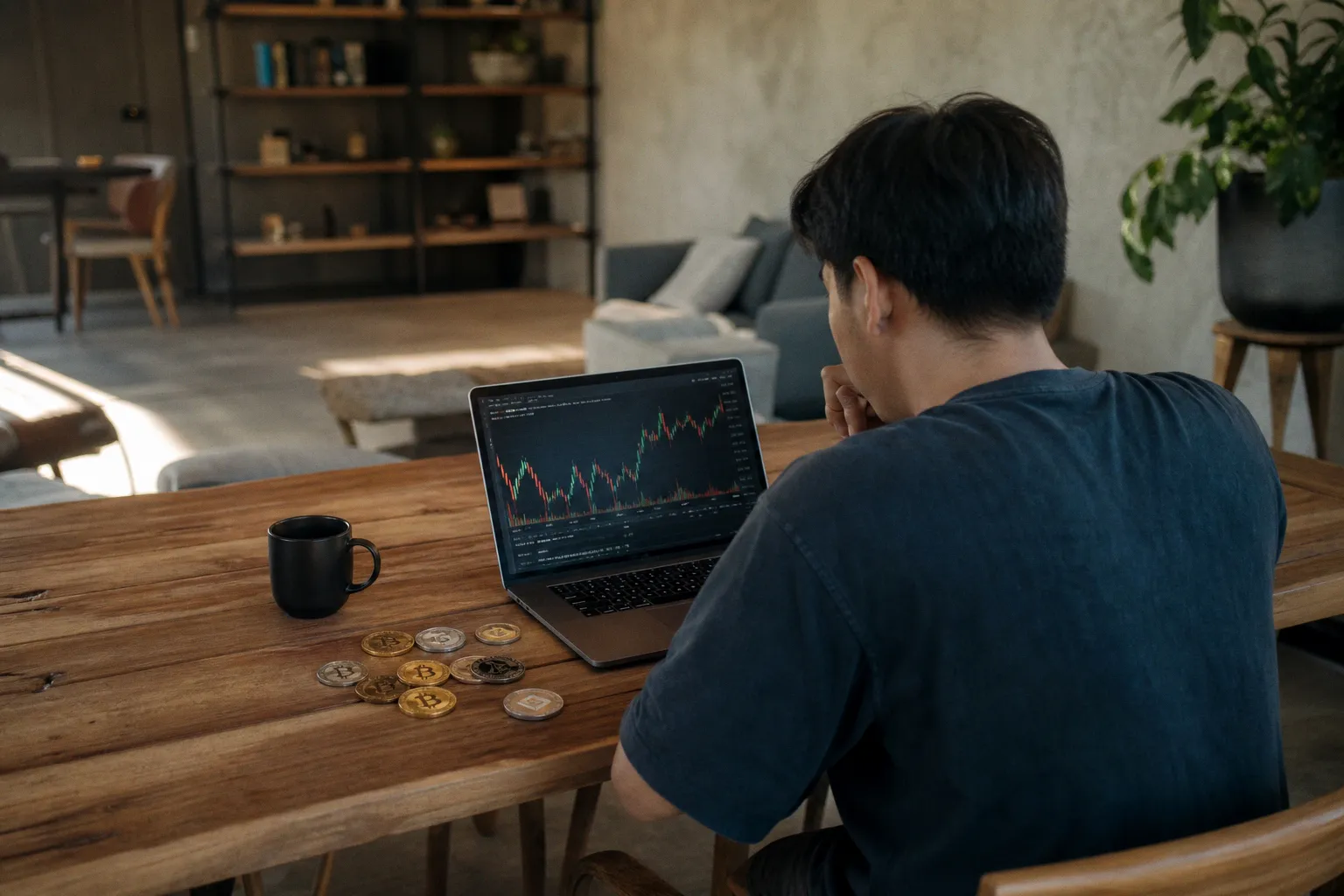
The second half of 2026 opens against a shifting liquidity backdrop: Bitcoin has dropped to $58K, per a Bitcoin Foundation brief, and that contraction is precisely the environment where tokenomics rather than narrative tends to determine which altcoins absorb capital. TradingView's H2 2026 review surfaces three projects — Sui, Ondo, and Chainlink — for reasons grounded in protocol architecture rather than speculative positioning.
Sui's emission curve against TVL absorption
Let us examine Sui first, because the central question here is one of throughput economics. With over 40% of supply already unlocked and monthly issuances continuing through H2 2026, the network faces a structural supply overhang. The bullish case, as TradingView frames it, depends entirely on whether total value locked expands faster than new tokens dilute existing holders. This is essentially a question of capital velocity against emission velocity: if DeFi activity and stablecoin liquidity grow at a pace that absorbs recurring emissions, dilution pressure becomes manageable. SUI is testing a weekly demand zone between $0.57 and $0.70, with a negative cumulative volume delta indicating that aggressive selling has dominated recent sessions. A reclaim of the $0.85–$0.90 order block would signal buyer strength, with $1.07 as the next logical resistance level. The long-term sustainability implication is straightforward: validators require real yield, not inflationary subsidy, for the security budget to remain sound.
Ondo and the tokenized-yield corridor
Furthermore, Ondo represents a different architectural bet — bridging traditional fixed-income instruments onto on-chain rails. The premise, per the same TradingView analysis, is that if interest rates ease and conventional yields compress, capital rotation into tokenized treasury products becomes structurally probable. Current price action tells a cautionary tale about leverage unwinds: open interest has dropped sharply while funding rates remained flat, indicating deleveraging without directional conviction. ONDO rebounded from support but stalled below $0.50, with the next accumulation zone identified around $0.23–$0.24. A successful retest there could establish the basis for a move toward the 0.236 Fibonacci level at approximately $0.655. From a tokenomics standpoint, the open question is whether RWA protocols can sustain fee-based revenue independent of the broader risk-on cycle.
Chainlink's interoperability layer
Chainlink, finally, occupies infrastructure-layer territory. The Cross-Chain Interoperability Protocol (CCIP) remains the architectural centerpiece, and institutional integration is the key adoption vector. LINK has corrected roughly 30% from its yearly highs and now trades within a heavily accumulated range, with a significant volume cluster between $6.96 and $7.67 indicating sustained trader engagement at those levels. Notably, the weekly RSI has advanced above its lower threshold for the first time since 2022 — a technical development worth tracking, though momentum alone does not guarantee protocol-level adoption. Consequently, the practical framework for July reduces to three observable variables: Sui's TVL growth rate relative to its emission schedule, Ondo's capacity to attract institutional yield-bearing capital as macro conditions shift, and Chainlink's CCIP integration pipeline. If we look at the broader market structure, Bitcoin's contraction to $58K creates the conditions where these tokenomics fundamentals — rather than beta-driven speculation — become the primary differentiators among altcoin exposure.